Kitchen Tiles: A Buyer's Guide to Floors and Walls
Kitchen tiles can be durable and easy to clean, but the right material and finish depend on their location and how you use your kitchen.
A busy family floor needs different qualities from a decorative splashback behind the hob. Appearance matters, but floor suitability, cleaning requirements and fitting costs deserve equal attention.
For UK homes, compare the complete installation rather than choosing on colour or price alone. Start with the differences between materials, then weigh up the finish, layout and care each option needs.
Key Takeaways
- Choose tiles for their intended location, because decorative wall tiles aren't automatically suitable for floors.
- Porcelain is generally dense and hard-wearing, whilst natural stone usually needs more careful maintenance.
- Floor grip depends on tested performance, not simply whether the surface looks matt or textured.
- Budget for preparation, fitting, delivery and finishing materials alongside the tiles themselves.
- Online shopping broadens your choice, but samples and a planned layout help prevent expensive mistakes.
Shop Kitchen Tiles
Kitchen Tiles: Which Types Suit Your Floor and Walls?
Floors face shoes, grit, dropped pans and repeated cleaning. Kitchen wall tiles mainly need protection against splashes and grease. As a result, the two surfaces don't need identical specifications.
Ceramic, porcelain and natural stone compared
Glazed ceramic tiles are a practical, often economical option for splashback tiles. Their protective glaze wipes clean easily, although suitability varies between products. Some ceramic tiles also work well on floors when their specification allows it.
Porcelain is generally denser and less absorbent than standard ceramic. Porcelain tiles have water absorption of 0.5% or less, but their finish still affects grip and cleaning. Their hardness also makes cutting more demanding.
Natural stone, including limestone, slate and marble, offers individual markings and texture. However, many stones need sealing and gentler cleaners. Acid-sensitive stones can suffer permanent surface damage from acidic spills.
Weight depends on thickness and size as well as material. Heavy wall tiles also need a suitably strong backing.
Mosaic, metro and large-format tiles
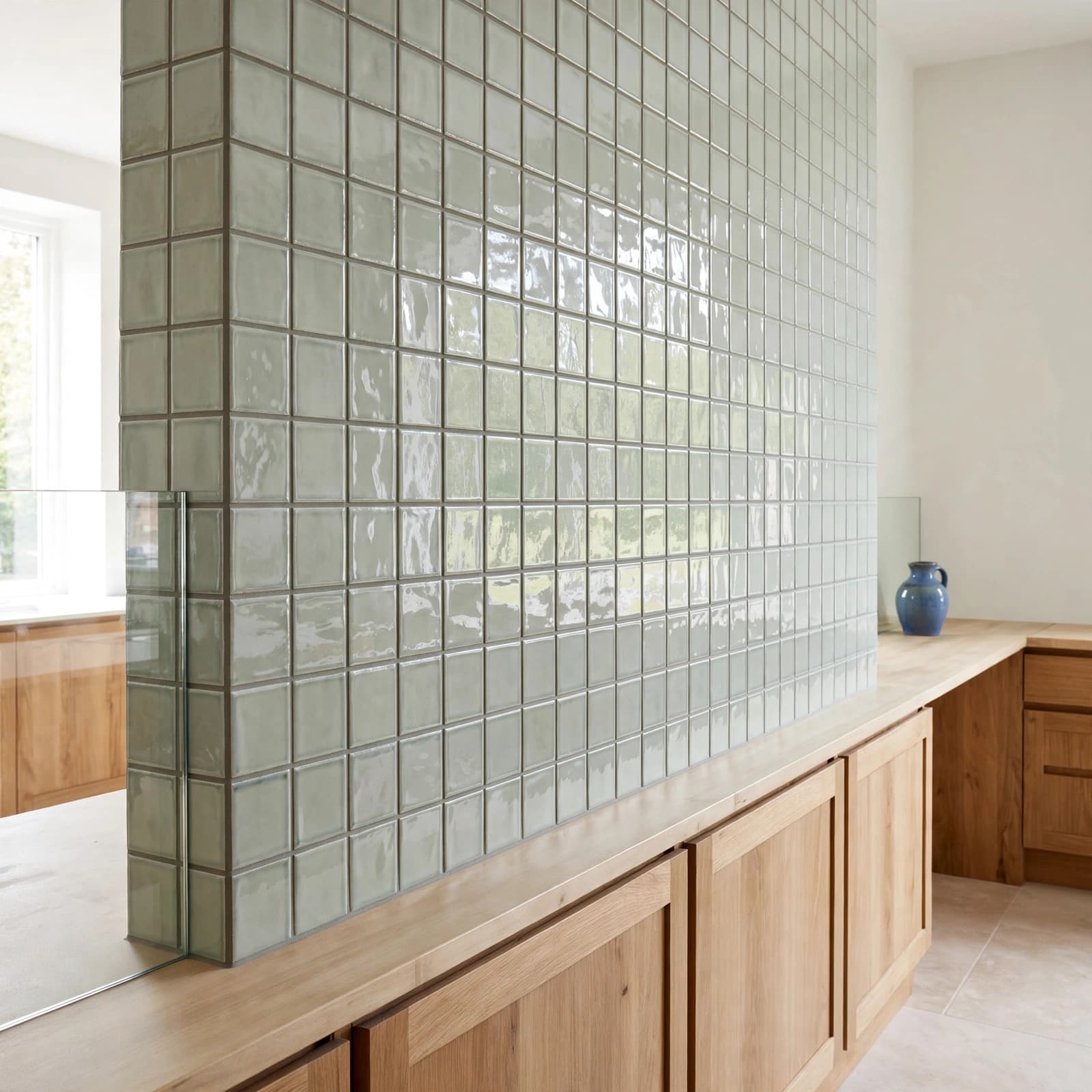
Mosaics suit decorative details and awkward shapes, but their many grout joints create extra cleaning work. Metro tiles offer a familiar rectangular look, with straight-stacked, brick-bond and herringbone layouts creating different effects. Contrasting grout can make the pattern stand out.
Large-format tiles reduce the number of grout lines. They can look calm in small kitchens, provided cuts around units and doorways remain balanced.
Fewer grout joints don't mean grout-free fitting. Large-format tiles still need appropriate joint spacing and a sufficiently flat base.
Always choose a floor-rated product for flooring, regardless of its shape or thickness.
How to Choose Kitchen Tiles for Everyday Use
Choose kitchen tiles around your cooking habits and household. Frequent frying puts grease on a kitchen splashback, whilst pets and garden access bring grit onto floors. A surface that looks immaculate in a photograph may demand more cleaning at home.
Check slip resistance, water exposure and cleaning needs
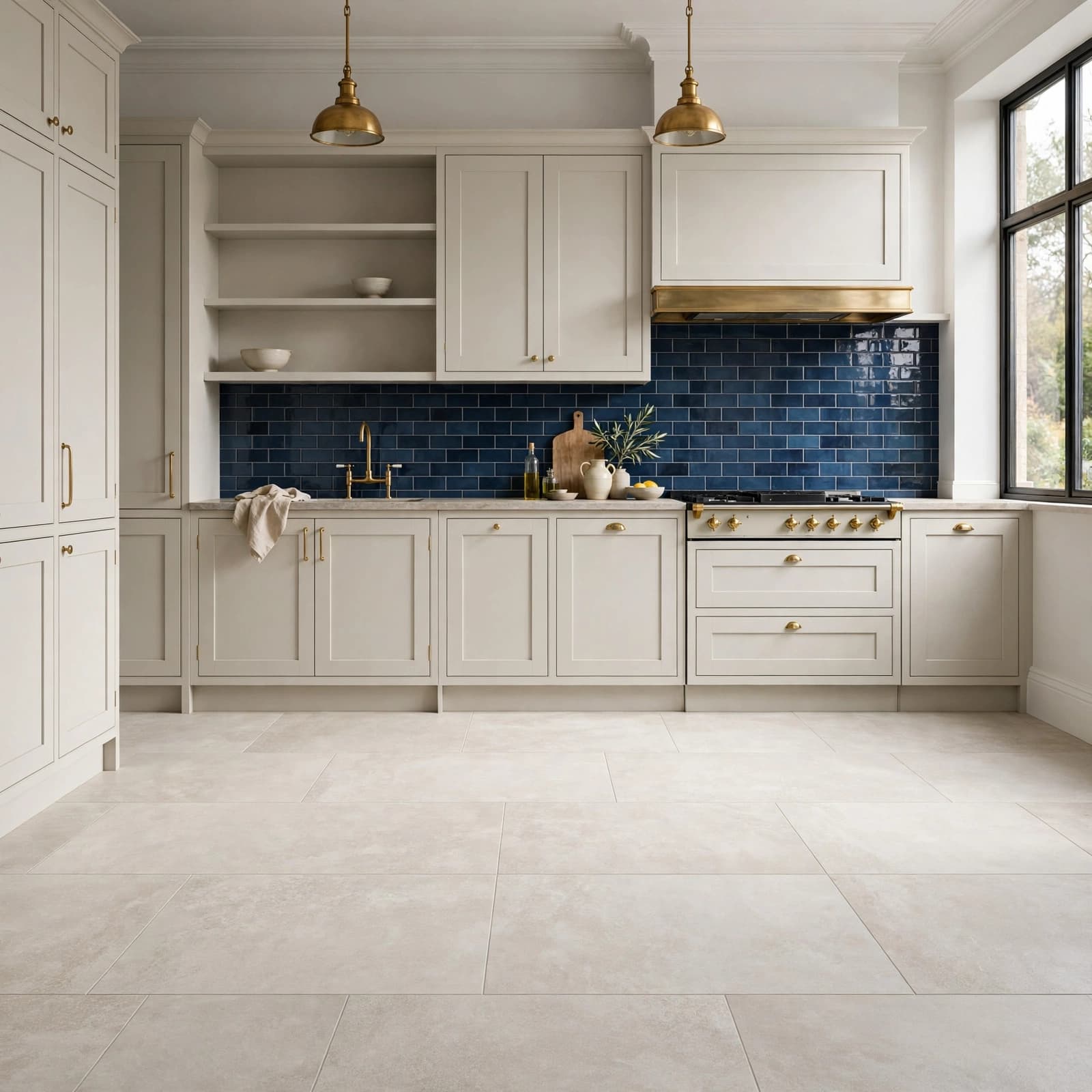
Kitchen floor tiles need suitable grip where water, cooking oil or food may spill. A matt appearance doesn't prove slip resistance, and a rough surface isn't automatically safe.
The product specification should identify its intended use and relevant slip-test performance. Choose a finish suited to the conditions, particularly around sinks and external doors.
For walls, a smooth, wipe-clean finish usually matters more than grip. Heavily ridged tiles can collect grease behind a hob, even when the material itself resists staining.
Also consider comfort. Tiles feel hard underfoot, and dropped crockery rarely survives. Underfloor heating can improve warmth, but it adds installation requirements and cost.
Match colour, finish and size to the room
Pale colours reflect more light, whilst darker shades create stronger contrast. However, dark floors can reveal pale crumbs and limescale; very light grout can expose cooking stains.
Gloss finishes bounce light around a dim room but show smears and reflections. Matt surfaces soften glare, although textured versions may need more scrubbing.
Similar tile and grout colours create a quieter surface. Contrasting grout emphasises the pattern and any uneven spacing.
View samples, including marble effect tiles, beside your cabinets and worktops in daylight and artificial light. A tile that looks neutral online may appear pink, yellow or grey in your kitchen.
What Do Kitchen Tiles Cost, Including Fitting?
The meaningful figure is the complete installed cost. Ceramic usually offers a lower entry price than porcelain, whilst natural stone can add sealing and specialist fitting costs.
However, material alone doesn't determine value. Decorative finishes, large formats and complicated layouts can increase both purchase and labour costs. Preparation may outweigh any saving on inexpensive tiles.
Measure carefully and allow for cuts and spares
Measure each floor or wall section in metres, then multiply length by height or width. Add separate areas together, with the layout determining how openings affect the quantity.
Allow extra for cuts, breakages and repairs. Around 10% is a common starting allowance for straightforward layouts, but diagonal patterns and awkward rooms can need more.
Pack coverage determines how many full boxes you need. Have the fitter settle the final quantity before ordering, especially for patterned designs.
Compare quotes and understand what is included
An itemised quote should cover old-tile removal, substrate preparation, levelling where necessary, adhesive, grout and trims. It should also identify delivery, labour, edge finishing and waste disposal.
Prices vary by region, access and complexity. Cutting around numerous sockets or fitting a herringbone pattern takes more time than a simple grid.
Compare quotes with the same scope of work. A cheaper total may exclude preparation or disposal, rather than offer better value. Also establish whether VAT is included where applicable.
Buying Kitchen Tiles Online and Planning the Installation
Buying kitchen tiles online gives you access to more sizes, finishes and patterns than a single showroom can display. It also makes it easier to compare prices per square metre, including for herringbone layouts.
However, the lowest headline price may lose its appeal after delivery charges, minimum order quantities or surplus packs.
Order samples and check product details before checkout
Start with samples, because screen images can't reliably communicate colour, texture or gloss. For stone and deliberately varied finishes, one sample won't show the full range of markings.
For kitchen wall tiles and floor products, check dimensions, thickness, material, finish, intended application and pack coverage. Order packs for a continuous visible area from a consistent batch or shade designation.
Read the returns terms before committing. Heavy tile returns can be expensive, and special-order products may have different conditions.
Plan delivery around safe, dry storage and access. Pallet delivery may stop at the kerb, so don't assume the driver will carry boxes indoors.
Prepare the kitchen and agree the layout with the fitter
A sound, stable substrate supports a lasting finish. Loose boards, cracks and uneven surfaces need attention before tiling begins.
Agree the starting point, grout spacing, whether contrasting grout is part of the finish, edge trims and cut placement. Avoid narrow slivers beside doorways or prominent cabinets where a better layout is possible.
Large tiles may need specialist cutting equipment and extra levelling. With underfloor heating, the installation materials and movement joints must suit the system.
Finally, agree appliance access and when you can walk on or clean the finished surface. Adhesive and grout curing times affect kitchen use.
Keeping Kitchen Tiles and Grout Looking Their Best
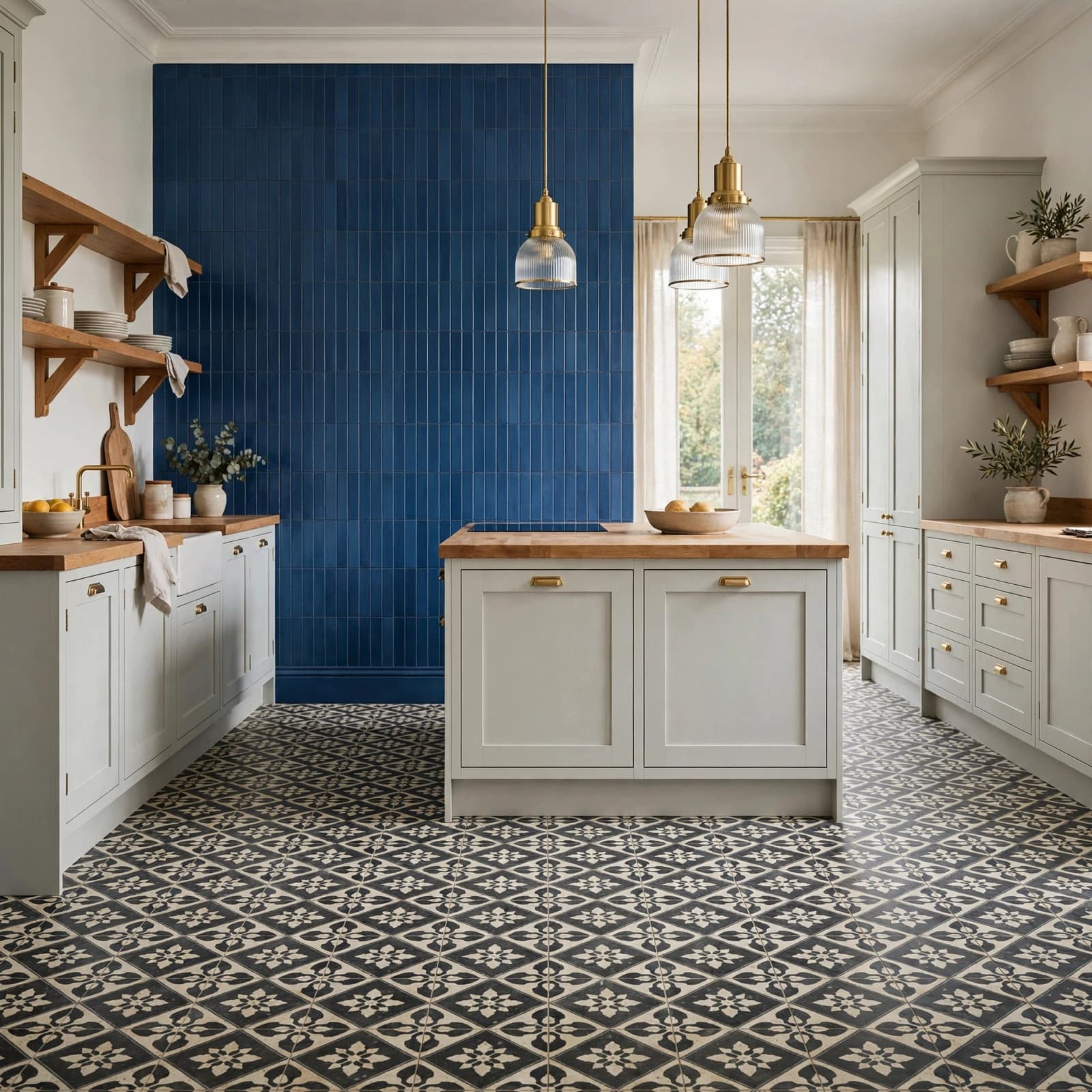
Tiles are easy to clean, but they still need care. The right routine depends on the tile surface, grout and any protective sealant. Follow the maker's care guidance for the complete finish.
Clean spills promptly and use suitable products
Sweep or vacuum grit before mopping, because particles can scratch vulnerable finishes. Then use a mild cleaner suited to the material, without leaving a heavy detergent residue.
Wipe cooking spills promptly, especially oil and acidic ingredients. Strong descalers, acidic cleaners and abrasive pads can damage natural stone or delicate decorative surfaces.
Where stone needs resealing, follow the specified product and interval. Sealing improves resistance to absorption; it doesn't make every stone stain-proof.
Protect grout and deal with chips early
Grout can discolour even when the tiles remain clean. Use a suitable grout cleaner and a gentle brush rather than aggressive scraping.
Investigate cracked or loose grout, since movement underneath may require attention. Small chips also deserve early assessment before damage spreads.
Keep matching spare tiles somewhere secure. Record the range, colour, size and batch details so future repairs have a better chance of blending in.
Frequently Asked Questions
Are porcelain tiles better than ceramic tiles for a kitchen floor?
Porcelain often suits busy floors because of its density and low absorption. However, a floor-rated ceramic tile can also perform well; intended use and surface performance matter more than the material name alone.
Can I use the same tiles on kitchen walls and floors?
Yes, when the product's stated applications include both and the wall can support its weight. Some collections offer coordinating versions with different properties, so matching appearance doesn't establish floor suitability.
How many spare kitchen tiles should I keep?
Keep enough for a realistic local repair, with more for complicated patterns or products that may become unavailable. The fitter can advise on quantity, and intact leftovers should stay labelled in their original packaging where possible.
Can kitchen tiles be laid over existing tiles?
Sometimes, provided the existing tiles are firmly bonded and the underlying surface is stable. Added height can affect doors, thresholds and appliance removal, so a qualified fitter should assess the surface and clearances before work is agreed.
Conclusion: Buy for the Surface You'll Live With
Start with tiles suited to their location, then compare finish, upkeep and the full installation cost. Samples help you judge appearance, whilst a planned layout reduces awkward cuts and unnecessary waste.
Buy tiles if you want a durable, wipe-clean surface and are comfortable planning the fitting and caring for grout. A suitable product can offer lasting value without an elaborate cleaning routine.
Reconsider them if installation disruption, hard flooring or ongoing grout upkeep would frustrate you. The right choice should suit everyday kitchen use as convincingly as it suits the room's style.
Shop Kitchen Tiles
Explore our Buyers Guides and Reviews
◦ 🏠 All Buyers Guides Homepage


Comments
Post a Comment