Kitchen Units: A UK Buyer's Guide to Fit and Value
Kitchen units are worth buying when they provide sturdy, accessible storage, but the right choice depends on your space, budget and how you cook. A coordinated set can improve preparation space and replace awkward cupboards, although attractive doors alone don't guarantee good value.
Your money needs to cover the whole fitted kitchen, including panels, worktops and installation, rather than the cabinets alone. This UK buyer's guide compares unit types, materials, planning, costs, online buying and fitting without treating the most expensive option as the automatic winner.
Start with the room and your storage needs before choosing a finish.
Key Takeaways
- Plan kitchen base units and wall units around your room's dimensions, appliance positions and everyday storage needs.
- Judge carcass construction, sealed edges and hardware separately from the appearance of the doors.
- Budget for panels, worktops, delivery and installation, alongside plumbing, electrical work and unexpected repairs.
- Online buying widens choice, but samples and complete specifications make comparisons more reliable.
- Standard units suit many kitchens; unusual spaces or complex fitting requirements can justify professional help.
Shop Kitchen Units
Kitchen Units: Which Types and Layouts Suit Your Home?
Base, wall and tall units each serve a different purpose
Position base units to support a practical work triangle between cooking, cleaning and preparation areas. They support worktops and hold heavier items such as pans, crockery and small appliances. Drawers offer easier access than deep shelves, particularly when bending or kneeling is difficult.
Wall units add storage without occupying floor space. However, mounting them too high makes everyday contents harder to reach. Open shelving is an alternative for frequently used items, although exposed surfaces collect grease and dust.
Tall units can contain pantry shelves, ovens or integrated fridge-freezers. They offer substantial capacity, but a bank of tall cabinets also removes potential worktop space. Position oven housings so you can handle hot trays comfortably.
Choose a layout that works with your room
A straight run suits narrow rooms and open-plan spaces, although storage and preparation areas share one wall. Galley layouts use two opposing runs efficiently, provided open drawers and appliance doors don't block the walkway.
L-shaped kitchens leave a more open centre and can accommodate dining space. U-shaped layouts provide generous worktop space, but their corners need careful planning.
For smaller kitchens, door swings matter as much as cabinet capacity. A dishwasher door can obstruct a passage, whilst a drawer beside a corner may collide with a handle.
Keep everyday storage options accessible without crossing the main cooking area unnecessarily.
How Do Materials and Build Quality Affect Kitchen Units?
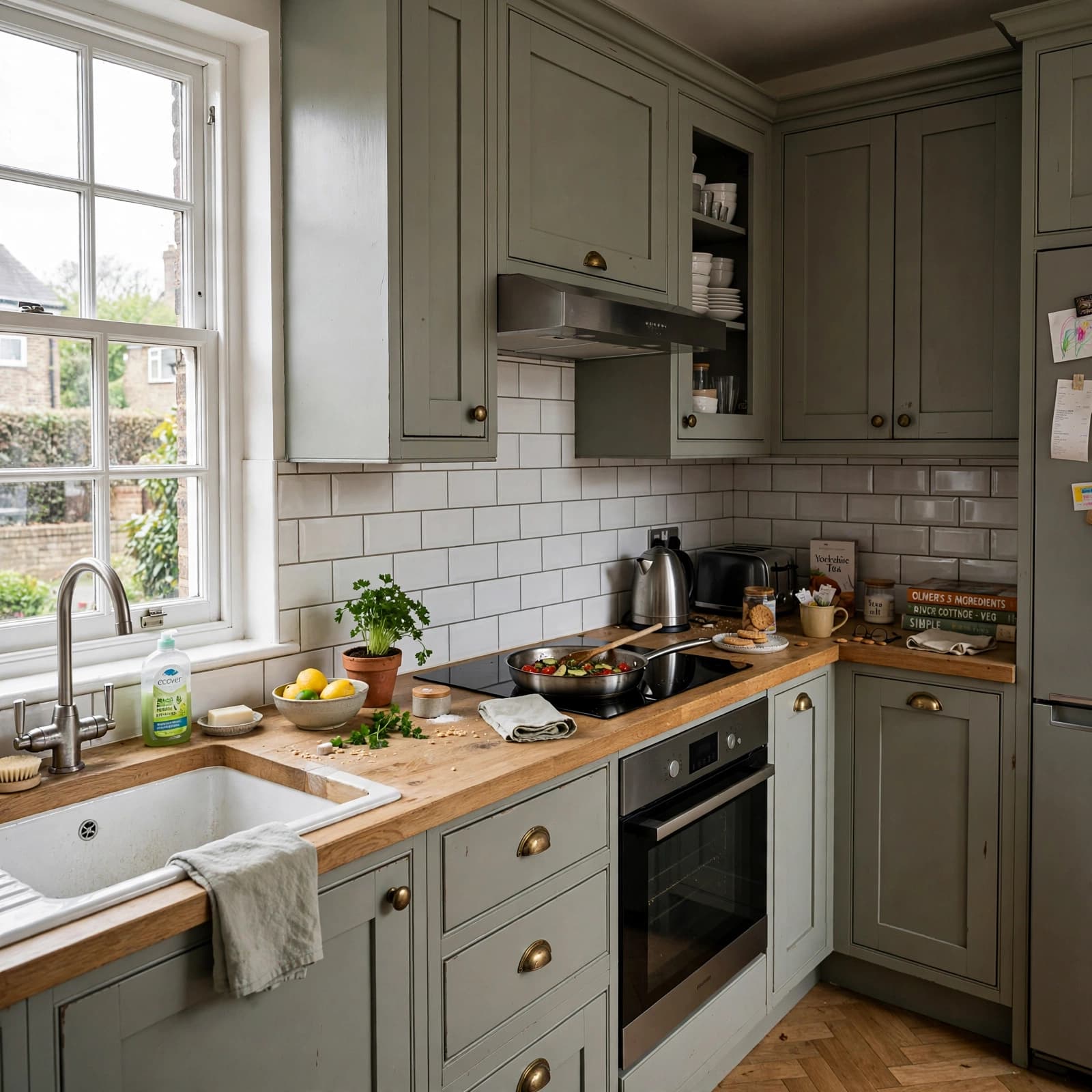 Photo by AI Generated
The carcass is the cabinet box. Assess it separately from the door, because an expensive-looking front can conceal basic construction.
Compare carcass materials, edges and backs
Melamine-faced chipboard is common, whilst MDF and plywood also appear in cabinet construction. Board thicknesses such as 16 mm and 18 mm are common, but thickness alone doesn't establish quality.
Firm joints, well-supported shelves and a securely fitted back help the cabinet remain square. Sealed edges protect vulnerable board surfaces, especially around sinks and dishwashers.
Moisture-resistant board can still swell when water reaches exposed edges or damaged joints.
Careful fitting and prompt attention to leaks matter whichever material you choose.
Pick door finishes for wear, cleaning and style
Painted doors offer varied colours and possible refinishing, although knocks can chip the coating. Laminate fronts generally tolerate routine cleaning well, but damaged edges are harder to repair invisibly. Check that laminate edges are firmly bonded, as chips can expose the board beneath.
Foil-wrapped doors provide shaped profiles at accessible prices. Heat and steam can cause the covering to lift, particularly near appliances.
Solid timber can be refinished but responds to humidity. Veneer gives a real-wood surface over a board core; deep damage can expose that core. Shaker profiles and plain slab doors offer different looks without requiring elaborate detailing.
Check hinges, drawer runners and adjustment
Drawers should move smoothly without twisting. Adjustable hinges help achieve even gaps, whilst sturdy fixings keep doors aligned.
Soft-close hardware improves daily use, but it doesn't compensate for weak construction. Replacement runners, hinges and meaningful warranty coverage offer more practical value than decorative extras.
How to Measure and Plan Kitchen Units Before You Buy
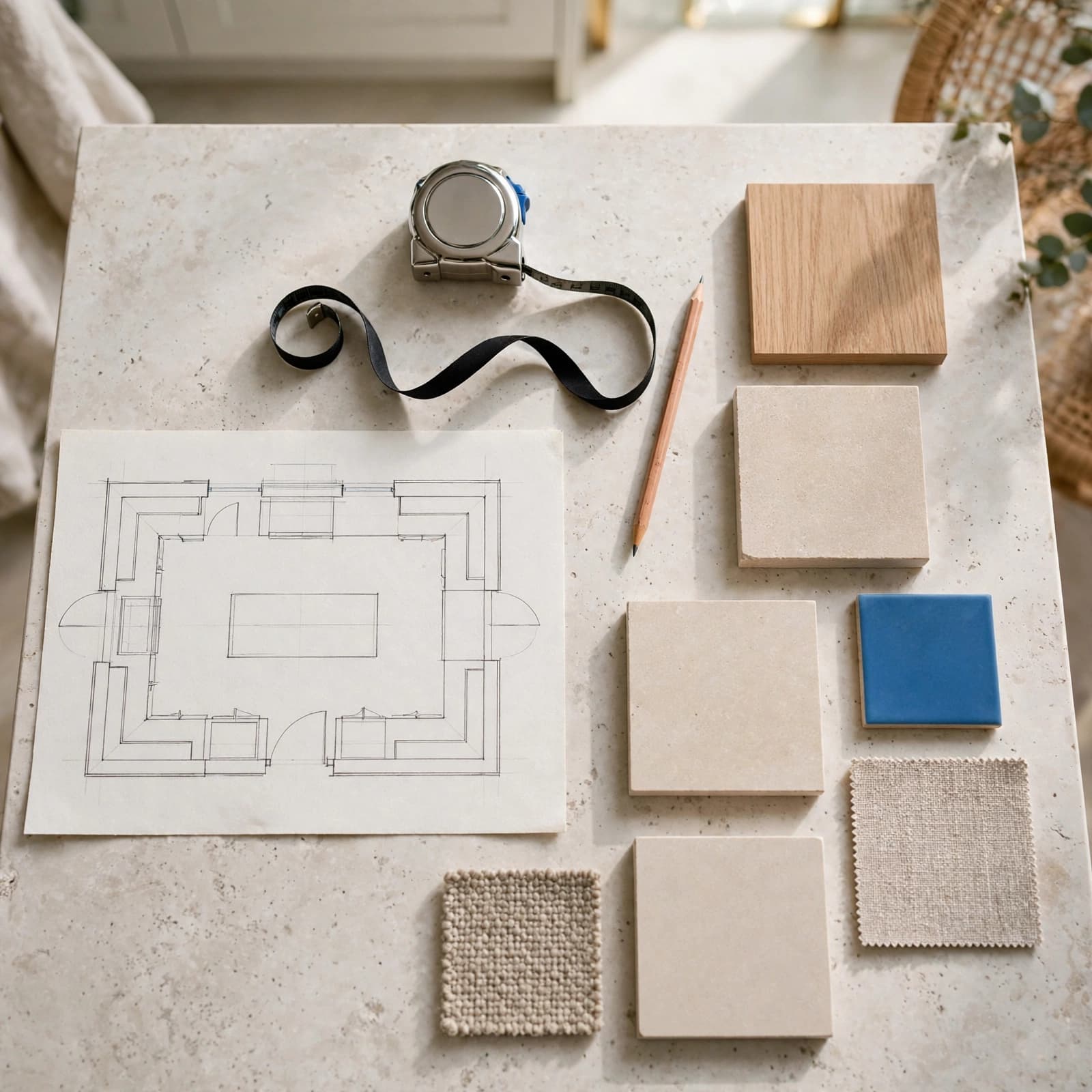
Measure walls, corners and fixed services carefully
Record wall lengths and ceiling height, then mark windows, doorways, sockets, pipework and appliance positions. Include radiators, boxed-in pipes and projecting window sills, as they can obstruct doors or worktops.
Measure more than once, at several heights where necessary. Walls aren't always straight, corners aren't always square and floors can slope.
Use millimetres throughout your plan. Distinguish the cabinet's dimensions from the space it needs once fitted. Filler strips may be needed beside walls so handles and drawers clear adjacent surfaces.
Match unit dimensions to appliances and worktops
Common cabinet widths include 300 mm, 450 mm and 600 mm, but there's no standard size across all ranges. Depth, carcass height and adjustable-leg allowances also vary, so check the product's actual specification.
Built-in appliances need compatible housings and the ventilation clearances stated in their installation instructions. Allow room for door movement, worktop overhangs and safe access.
An integrated appliance's furniture door also needs compatible dimensions and fittings. A matching colour doesn't establish compatibility, and plumbing behind a dishwasher can reduce the usable installation depth.
Plan storage around the way you cook
Place pans and other everyday items in kitchen base units near the hob, food near preparation space and cleaning products near the sink. Keep waste and recycling accessible without obstructing another cabinet.
Deep pull-out drawers make contents easier to see. Corner mechanisms can improve access, although they add cost and may sacrifice some capacity. Storage options such as internal organisers work best when their dimensions suit what you own.
What Do Kitchen Units Cost, and Is a Higher Price Worth It?
Build a budget beyond the unit price
A cabinet price may exclude its door, handles or internal fittings. Your full budget also needs end panels, plinths, fillers, worktops, delivery and installation.
Plumbing, electrical work and waste removal can add substantial costs, especially when appliances move. Once old units come out, damaged plaster or flooring may need attention.
Compare itemised project totals, including VAT where applicable. Check whether exposed end panels are included or itemised, and compare headline discounts carefully. Keep an allowance for unexpected work instead of spending the entire budget on fronts.
Compare flat-pack, ready-assembled and made-to-measure options
Flat-pack kitchen units can cost less and are easier to carry through tight access routes. However, assembly takes time, and inaccurate construction can create fitting problems.
Ready-assembled cabinets reduce on-site assembly work, but their bulk requires suitable delivery access and dry storage.
Made-to-measure units can use awkward spaces more effectively. Their higher cost is easier to justify when a standard size would leave substantial wasted space.
The format alone doesn't determine quality. Compare materials, hardware, fitting labour and service terms on the same basis. A simple laminate kitchen with dependable drawers can offer better value than decorative doors fitted to weaker boxes.
Weigh the benefits and drawbacks before committing
- New units can improve storage and appearance, with styles and specifications available across different budgets.
- Installation brings disruption, and omitted fittings or service changes can undermine an apparently cheap quotation.
- Delivery and fitting can damage components; discontinued finishes can also make replacement doors difficult to match later.
Buying Kitchen Units Online: How to Compare Options Safely?

Online shopping gives you access to more sizes and finishes than a single display. It also makes price comparisons easier, provided each basket includes equivalent components.
Use product details and samples to judge the finish
Read full dimensions, carcass and door materials, assembly requirements and included fittings. Also examine colour descriptions, delivery charges and warranty exclusions.
Screens can distort colour and sheen. Compare a laminate sample beside your flooring and worktop to see whether its colour looks warm or cool, and whether its texture attracts fingerprints.
Compare identical unit schedules across quotations. Otherwise, a lower total may reflect fewer drawers, missing panels or cheaper hardware rather than a genuine saving.
Check delivery, returns and replacement-part support
Delivery terms should explain access requirements, lead times and whether the service includes carrying units indoors. Packaged cabinets need dry storage before fitting.
Read damage-reporting procedures, return conditions and arrangements for missing or faulty parts before ordering. Photograph packaging damage and retain product codes, plans and written quotations.
Made-to-measure goods can fall outside standard online cancellation rights, although rights relating to faulty goods still apply. Don't assume every unwanted cabinet can be returned.
Know when to choose a fitter or install the units yourself
DIY fitting suits buyers with suitable tools, joinery skills and time. Cabinets need levelling, secure fixing and consistent alignment before worktops go on.
Uneven walls, complex layouts and service changes favour professional installation. Electrical work requires appropriate competence, and gas appliance work requires a Gas Safe registered engineer. Specialist worktop materials may also require professional templating and fitting.
Frequently Asked Questions
Can I replace kitchen doors without changing the units?
Yes, if the carcasses are sound and compatible door sizes, hinge positions and drawer fronts are available. Include exposed end panels in the redesign, because old finishes may remain visible. Damp, damaged or poorly fitted boxes make replacement doors a weak long-term investment.
How long should kitchen units last?
There's no single guaranteed lifespan. Construction, fitting, moisture exposure and maintenance all affect service life. Consider the materials and current condition alongside the warranty, remembering that a warranty describes coverage rather than promising an exact replacement date.
Are standard kitchen units easy to mix with units from another range?
Matching nominal widths doesn't guarantee compatibility. Carcass heights, depths, door gaps and fixing systems can differ between ranges. Even similar colours may look different side by side, so a mixed design needs matching dimensions and compatible components throughout.
Should kitchen units be fitted before the flooring?
The sequence depends on the flooring system and cabinet design. Floating floors need movement space and generally shouldn't be trapped beneath fixed cabinets. The installation plan must also account for finished floor height, particularly where a dishwasher could become trapped beneath the worktop.
Our Verdict: Buy for Fit, Storage and Full-Project Value
Kitchen units are a worthwhile purchase when the dimensions, storage plan and construction suit your home. A dependable cabinet with useful fittings earns its price through daily use, rather than appearance alone.
Buy if the layout works, the materials suit your household and the complete fitted cost is affordable.
Skip or reconsider if measurements remain uncertain, fitting costs are missing, or you can't confirm replacement-part support and the cost or availability of matching end panels. Compare written specifications and itemised quotations before ordering, so your chosen kitchen delivers the storage and access you need.
Shop Kitchen Units
Explore our Buyers Guides and Reviews
◦ 🏠 All Buyers Guides Homepage
https://comparepriceswebsite.co.uk/index.php/2026/10/13/kitchen-units/


Comments
Post a Comment